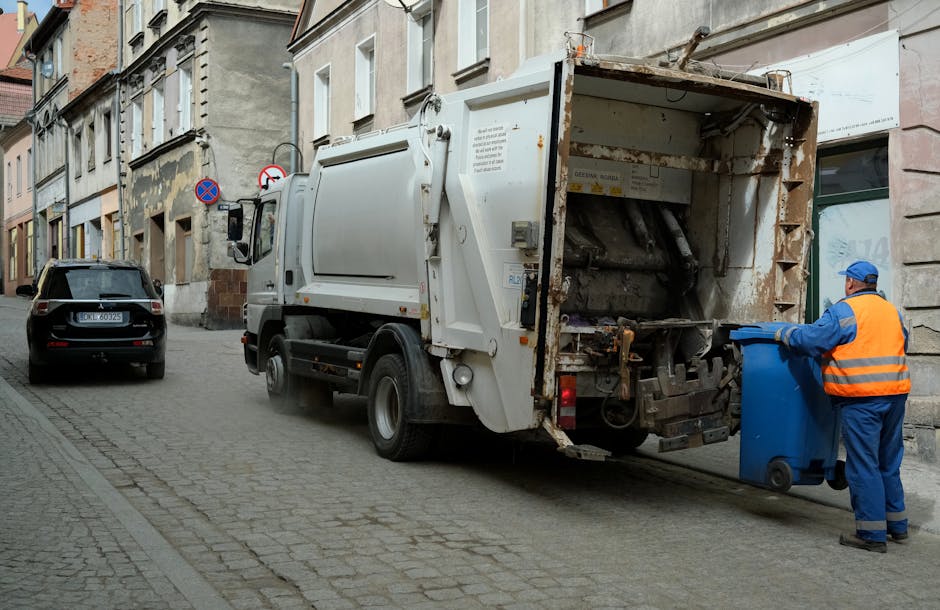
Rubbish collection options on Chiswick High Road
If you live, work, or manage a property near Chiswick High Road, rubbish has a habit of appearing at exactly the wrong time. A broken wardrobe by the front door. Boxes stacked in a flat hallway. Builder's offcuts after a quick refit. Or maybe it's just the usual mix of bulky waste, old furniture, and general clutter that has quietly taken over a room.
This guide breaks down the main Rubbish collection options on Chiswick High Road, how each one works, when it makes sense, and what to watch out for. The aim is simple: help you choose a sensible, legal, and cost-aware way to clear waste without making the job harder than it needs to be. To be fair, most people do not need a complicated system - they need a clear answer.
Why rubbish collection on Chiswick High Road matters
Chiswick High Road is busy, mixed-use, and always moving. That matters because rubbish collection is not just about removing waste; it is about doing it in a way that fits around traffic, neighbours, access, loading times, and the general rhythm of the street. A bin system that works at the back of a quiet suburban house can fall apart fast when you're dealing with a flat above a shop, a cafe refurbishment, or a family home with limited parking outside.
The practical issue is usually access. On a road like this, you may have narrow time windows for loading, limited storage for waste, and more foot traffic than you would get on a side street. That changes the decision-making. Should you book a man-and-van collection? Use a skip? Arrange a full clearance? Wait for council-style disposal? Those are different tools for different jobs, and choosing the wrong one can waste time, money, and patience.
It also matters from a trust and cleanliness point of view. Waste left too long outside a property can create odour, attract pests, and make a place look neglected. For businesses, that can affect customer confidence before anyone has even walked in the door. For households, it simply creates stress. And let's face it, rubbish stress is a very real thing.
If you are planning a larger clearance, it can help to think beyond the one-off pile in front of you. A broader waste removal approach often makes more sense when the job is a mix of bulky items, bagged rubbish, and odd bits that do not fit neatly into a bin.
How rubbish collection works in practice
Most rubbish collection options on Chiswick High Road fall into one of four broad categories: council-style collection, skip hire, man-and-van collection, or a specialist clearance service. Each one works differently.
Council collection is usually best for standard household waste, but it is not designed for every situation. Booking times can be fixed, item types may be limited, and bulky loads can be awkward if you need speed.
Skip hire suits projects with a steady stream of waste, especially if you are renovating or clearing space over a few days. The downside is that it needs room. On a busy road, placement and permits can be a headache, and an open skip is not always ideal if passers-by may add their own waste. Annoying, yes.
Man-and-van collection is popular for furniture, mixed rubbish, flat clearances, and smaller loads that you want taken away quickly. The team loads the waste for you, which is a big relief if the items are heavy or awkwardly shaped.
Specialist clearance services cover jobs like flat clearance, house clearance, office clearance, or builders waste clearance. These are useful when the challenge is not just moving rubbish but sorting, lifting, and responsibly handling different waste streams.
The best option depends on four questions:
- How much waste do you have?
- What type of waste is it?
- How quickly does it need removing?
- How easy is access to the property or loading point?
Once you answer those, the right route becomes much clearer.
Key benefits and practical advantages
A well-chosen rubbish collection option does more than clear space. It reduces friction. That is the real benefit.
- Faster turnaround: You get the space back sooner, which matters if you are between tenants, preparing for a move, or trying to reopen a room for use.
- Less lifting for you: Heavy lifting is often the hidden cost of DIY waste management. Professional collection removes that burden.
- Better access management: On a busy road, a planned collection can minimise disruption to neighbours, pedestrians, and traffic flow.
- Cleaner presentation: Especially for shops, cafes, clinics, and offices, rubbish removed promptly makes the property feel cared for.
- More suitable handling: Some items need separate disposal methods, such as fridges, mattresses, or anything potentially hazardous.
- Lower risk of damage: Moving bulky items through narrow hallways or stairwells can scuff walls and floors. A good crew knows how to work around that.
There is also a mental benefit people underestimate. A cleared space tends to create momentum. One room leads to another. One old sofa goes, then suddenly the hallway looks manageable again. Simple, but true.
If your job involves mixed items, it can be worth reviewing furniture disposal or furniture clearance options rather than treating everything as generic rubbish. The more specific the service, the smoother the result tends to be.
Who this is for and when it makes sense
Rubbish collection on Chiswick High Road is relevant to more people than you might think. It is not only for major refurbishments or end-of-tenancy panic. In fact, the smaller everyday jobs are often where the right option saves the most hassle.
Homeowners and tenants
If you are clearing a flat, dealing with an unwanted sofa, or finally tackling the loft, a collection service can be much easier than trying to squeeze items into a car. For flats in particular, staircases and shared entrances make heavy items a pain, no other way to put it.
Landlords and letting agents
Void periods and move-outs often leave behind a mixed mess: bags, furniture, broken small appliances, and a bit of everything. A fast clearance can help you reset the property and reduce delays.
Business owners
Shops, offices, salons, cafes, and clinics all produce waste that needs to be managed carefully. For businesses, reliable collection is part of keeping the premises professional. If you need something regular rather than one-off, business waste removal may be the more practical route.
Tradespeople and renovators
Builders, decorators, and fit-out teams often end up with timber, plasterboard, broken fixtures, packaging, and general debris. A dedicated builder's waste service can save a surprising amount of time compared with stacking everything and hoping for the best.
Anyone with awkward or bulky items
That includes mattresses, sofas, fridges, garden waste, garage clutter, and loft overflow. These jobs are often straightforward in theory and awkward in practice. A bit like carrying a wardrobe down stairs while pretending your shoulder is fine.
For those types of items, these related services can be especially helpful: mattress and sofa disposal, fridge and appliance removal, garden clearance, and garage clearance.
Step-by-step guidance
If you want the process to run smoothly, it helps to treat rubbish collection like a small project. A few minutes of planning can save a whole afternoon of frustration.
- Sort the waste by type. Separate furniture, general rubbish, electrical items, building debris, and anything potentially hazardous. A rough sort is fine. It does not need to be perfect.
- Check access. Think about stairs, narrow doorways, parking, loading restrictions, and whether items need to come down from a loft or out of a basement.
- Estimate volume. Is it a few bags, a van-load, or enough for a larger clearance? This affects the most sensible collection method.
- Flag special items early. Fridges, paint, chemicals, sharps, confidential paperwork, or heavy appliances may need separate handling.
- Compare the practical options. Decide whether you need a one-off collection, a fuller clearance, or an ongoing arrangement.
- Get a quote with clear details. Photos help. So do honest descriptions. The more accurate you are, the fewer surprises later.
- Prepare the items. Put loose waste together, clear a path if needed, and make sure the collection point is accessible.
- Confirm what happens after collection. Ask how items are sorted, reused, recycled, or disposed of. That matters more than people think.
If the waste is part of a larger clean-out, a broader service like home clearance or loft clearance may be the better fit than a simple single-item collection. The job becomes easier when the service matches the reality of the mess.
Expert tips for better results
After you have handled a few clearances, certain patterns show up again and again. The first is that people often underestimate volume. The second is that access problems create more delay than the waste itself.
Tip 1: Photograph the waste in daylight. It sounds obvious, but phone photos taken in a dim hallway or under a yellow bulb are not very helpful. A quick daylight photo gives a better sense of the load.
Tip 2: Leave a little breathing room. If a room is packed edge to edge, collection takes longer and the risk of scuffed walls goes up. Even a small cleared path can make a big difference.
Tip 3: Separate anything reusable. Not everything needs to be treated as rubbish. Some furniture or fixtures may be suitable for reuse, depending on condition. You do not need to overthink it, just avoid sending good items to waste by default.
Tip 4: Be cautious with unknown materials. If a bag, can, or container has no clear label and looks suspect, do not guess. Hazardous waste should be handled carefully and in line with proper procedures. If in doubt, it is better to ask before collection day.
Tip 5: Match the service to the scale. A small furniture pickup is not the same as a large probate clearance or an office strip-out. Choosing the right service saves you from paying for capacity you do not need - or booking something too small for the job.
A sensible place to start, especially if you are comparing several collection routes, is the operator's pricing information. A clear pricing and quotes page should help you understand how jobs are typically assessed.
Common mistakes to avoid
Most rubbish collection problems are avoidable. The issue is rarely bad luck. It is usually a small oversight that grows into a bigger one.
- Booking the wrong type of service. A single bulky item and a whole flat clearance are not the same brief. Using the wrong service can lead to delays or extra charges.
- Ignoring access restrictions. On Chiswick High Road, access and parking can shape the job as much as the waste itself.
- Mixing hazardous waste with general rubbish. This is a common mistake. It can complicate disposal and create safety issues.
- Forgetting appliance requirements. Fridges, freezers, and some electricals need special treatment. Do not assume they can go with general junk.
- Leaving confidential material unsecured. Business and home office waste can include bills, records, and other personal information. That should not be exposed casually.
- Waiting until the pile grows too large. The bigger the pile, the more annoying it becomes. There is a point where a small job turns into a major one very quickly.
A slightly messy but useful rule of thumb: if you have to keep stepping around the rubbish, you have probably already waited too long.
Tools, resources and recommendations
You do not need a truckload of equipment to organise rubbish collection properly. But a few simple tools make life easier.
- Phone camera: Use it to document items for a quote and to keep a record of what was collected.
- Labels or marker pens: Handy when separating items into keep, donate, recycle, and remove piles.
- Gloves and basic protective gear: Useful if you are moving waste yourself before collection.
- Measuring tape: Helps when checking whether bulky items will fit through doors or down stairs.
- Notepad or checklist: Keeps you from forgetting the awkward stuff like cellar items, loft boxes, or the broken lamp that has been lurking for months.
For people who want a deeper sense of what can be loaded into a mixed disposal job, what can go in a skip is a useful reference point, even if you decide a skip is not your final choice. It helps clarify the difference between ordinary waste, restricted items, and materials that need separate handling.
If you are trying to improve environmental performance as well as convenience, recycling and sustainability is worth a look. Waste removed cleanly is one thing; waste managed responsibly is better.
Law, compliance, standards, or best practice
Waste collection in the UK is not just a practical matter. It also comes with duties around safe handling, appropriate transfer, and responsible disposal. You do not need to become a waste compliance specialist, but you should understand the basic expectations.
At a common-sense level, the best practice is straightforward:
- Use a provider that can explain how waste is handled after collection.
- Keep hazardous and non-hazardous items separate where possible.
- Make sure electrical and appliance waste is treated appropriately.
- Do not leave waste in a way that blocks pavements, entrances, or shared access points.
- Protect personal and business information before handing over papers, media, or files.
For business premises, the bar is usually higher because you may be dealing with mixed streams, staff safety, and public-facing spaces. In those settings, a documented approach matters. If you need discreet handling of records or paperwork, confidential shredding is a more suitable route than simply throwing documents into a mixed bin.
Safety matters too. A responsible operator should be able to explain its approach to lifting, carrying, site access, and risk reduction. If you want reassurance on that side of things, look for pages such as health and safety policy and insurance and safety. Those pages tell you how seriously a provider takes the job, and that is not just box-ticking. It can make a real difference when a staircase is tight or an item is heavier than it looks.
Options, methods, and comparison table
Here is a simple comparison of the most common rubbish collection options on and around Chiswick High Road. This is not about finding the one perfect answer. It is about choosing the least awkward one for your situation.
| Option | Best for | Pros | Potential drawbacks |
|---|---|---|---|
| Council-style collection | Standard household waste and occasional bulky items | Familiar, routine, good for simple jobs | May be slower, less flexible, and limited on item types |
| Skip hire | Renovations, ongoing clear-outs, heavier mixed waste | Useful for larger volumes, can stay on site | Needs space, may require permissions, can be awkward on a busy road |
| Man-and-van collection | Furniture, mixed rubbish, smaller to medium loads | Flexible, quick, loading help included | Can be less efficient for very large or long-running jobs |
| Specialist clearance | Flats, houses, offices, lofts, garages, builders waste | Handles sorting, lifting, and disposal in one go | May be more than you need for a tiny load |
If you are still deciding, ask yourself one direct question: do I need just removal, or do I need removal plus sorting, lifting, and a bit of problem-solving? That question usually points you toward the right category.
For furniture-heavy jobs, a specialist route such as mattress and sofa disposal or furniture clearance may be a cleaner fit than trying to manage everything as generic rubbish.
Case study or real-world example
Here is a realistic local scenario. A couple in a first-floor flat near Chiswick High Road had been meaning to clear out an old sofa, two mattresses, a broken chest of drawers, and a pile of bagged clutter from a spare room. They had tried to work out whether a skip would help, but the street space was tight and the building entrance was shared. After a bit of back and forth, they chose a collection service that could handle both lifting and mixed waste in one visit.
The important detail was not the waste itself. It was the access. The hallway was narrow, the stairs turned sharply at the landing, and the sofa looked twice as large indoors as it had in the flat's photos. Typical, really.
By planning the collection around access and item type, the job was done without blocking the street or leaving rubbish outside overnight. The clients got the room back, the building remained tidy, and there was no second visit needed for the mattress or broken furniture. That is the kind of outcome people are usually after, even if they do not say it quite like that.
If the same flat had also been clearing cupboards, paperwork, and old appliances, the best fit might have been a fuller flat clearance rather than a basic pickup. One small decision can change the whole experience.
Practical checklist
Use this before you book any rubbish collection option on Chiswick High Road.
- Have I listed everything that needs to go?
- Do I know which items are bulky, heavy, electrical, or hazardous?
- Is access straightforward, or will stairs, parking, or narrow doors make it harder?
- Have I separated anything I want to keep, donate, or reuse?
- Do I need a one-off collection or a more complete clearance?
- Have I taken clear photos of the waste?
- Have I checked whether any documents need confidential disposal?
- Do I understand the collection timing and any restrictions on the day?
- Have I chosen the service that best fits the waste type?
- Do I know what happens to the waste after it is collected?
One more thing: if the job is connected to a move, a probate matter, or a renovation with a lot of moving parts, give yourself more time than you think you need. That one little buffer can save a lot of stress.
Conclusion
The best rubbish collection option on Chiswick High Road is the one that fits your waste, your access, and your timeframe without adding unnecessary complications. For some people, that means a quick one-off pickup. For others, it means a fuller clearance that handles sorting, lifting, and disposal in one tidy process.
What matters most is being realistic about the job in front of you. Small loads, bulky furniture, office waste, loft clutter, garden cuttings, and builders' debris all behave differently. Once you match the method to the mess, everything becomes easier. Cleaner, calmer, done.
And if you are still weighing up the best route, it is worth exploring the service options in detail and choosing the one that feels solid, not rushed. The right decision tends to pay for itself in time, space, and peace of mind.
Get a free quote today and see how much you can save.
Frequently Asked Questions
What are the main rubbish collection options on Chiswick High Road?
The main options are council-style collection, skip hire, man-and-van collection, and specialist clearance services. The best choice depends on how much waste you have, what type it is, and how easy it is to access the property.
Is a skip always the cheapest option?
Not necessarily. A skip can work well for larger renovation jobs, but on a busy road it may bring extra practical issues such as placement, permits, and space. For smaller or mixed loads, a collection service can sometimes be better value overall.
What kind of rubbish is hardest to collect?
Bulky items, awkward furniture, heavy appliances, and mixed waste from flats or offices usually take more planning. Anything hazardous or confidential also needs more care than standard rubbish.
Can I get rubbish removed from a flat above a shop?
Yes, but access matters. Stairs, shared entrances, loading restrictions, and pedestrian traffic all affect the collection method. Flat-based jobs often work best with a service that includes lifting and loading.
Do I need separate help for sofas, mattresses, or fridges?
Often, yes. Those items may need specialist handling. Services such as furniture disposal, mattress and sofa disposal, or fridge and appliance removal are designed for those specific problems.
How do I know if my waste is hazardous?
If the material could be harmful, flammable, corrosive, or otherwise unsafe, treat it cautiously. Paints, chemicals, solvents, and some workshop materials may need separate disposal. When in doubt, ask before collection.
What should businesses on Chiswick High Road do with regular waste?
Businesses usually need a more structured approach than households. Regular business waste removal can help keep the premises tidy and make collection more predictable.
How can I prepare for a rubbish collection visit?
Sort items roughly by type, clear a path where possible, take photos for the quote, and make sure access is open. A little preparation goes a long way, honestly.
What if I need to clear out paperwork as well as rubbish?
Confidential documents should be handled separately. A service like confidential shredding is a safer choice than adding papers to a mixed waste pile.
Is it better to book a full clearance or a single-item pickup?
If the job includes multiple rooms, mixed items, or a lot of sorting, a full clearance is usually easier. If it is just one or two bulky pieces, a pickup may be enough.
Can rubbish collection help with sustainability?
Yes, especially if items are sorted for reuse, recycling, or responsible disposal. Choosing a provider with a clear approach to recycling and sustainability is a good sign that the waste will be handled carefully.
What is the most common mistake people make?
Underestimating the load. People often think a job will take ten minutes and then discover a sofa, a pile of bags, and a wardrobe panel they forgot about. It happens all the time.